
MYOTT HISTORY UP IN FLAMES
I do not profess myself to be an expert on anything really but believe research is the key to unlocking the identity to many pieces. Nothing excites me more than finding out the name of a maker or even the name of a pattern. Myott is one of those makers that has eluded and mislead me on occasion so I needed to undertake some extensive research to that end, and this is what I have discovered. Hopefully it will inspire you to seek out Myott instead of tossing it aside because you've never heard of it.
I do not profess myself to be an expert on anything really but believe research is the key to unlocking the identity to many pieces. Nothing excites me more than finding out the name of a maker or even the name of a pattern. Myott is one of those makers that has eluded and mislead me on occasion so I needed to undertake some extensive research to that end, and this is what I have discovered. Hopefully it will inspire you to seek out Myott instead of tossing it aside because you've never heard of it.
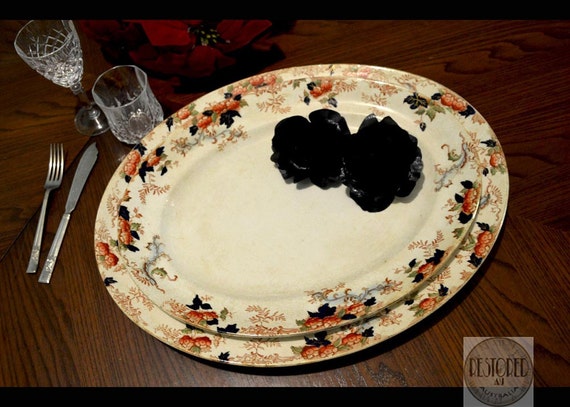 |
| MYOTT - LYN PATTERN |
 |
| MYOTT - FINLANDIA PATTERN |
So the story goes...
Once upon a time a young man from Switzerland took the trade of a potter in merry old England at the Alexander Pottery, Stoke-On-Trent, upon Wolfe Street (often referred to as the Wolfe St Pottery).
His name was Ashley Myott. In 1898 His boss sadly passed and nineteen year old Ashley assumed control of the pottery renaming it MYOTT SON & CO LTD, making him the "YOUNGEST INDEPENDENT POTTER OF THE PERIOD".
From 1989 to 1902 Business grew at the Alexander Pottery under his intuative guidence and Myott soon out-grew its Wolfe St Pottery, so the decision was made to move to Brownfield's Works in Cobridge and extend in to Upper Hanley Pottery which was purchased from Grimwades in 1925, establishing the Alexander Potteries.
Soon came the colourful, geometics of the Art Deco, which Myott embraced and by the 1930s had artists such as Clarice Cliff and Susie Cooper among others, handpainting pieces. Myott designers & artists were not identified as the pieces were never signed. Blue and red colours were infrequently used in the colour schemes then, but demand high prices today, if you can find them.
A grand colaboration took place between heavy weights, Myott & Goldscheider, an Austrian company, creating beautiful figurines and masks until 1950.
But alas, the world of Myott FELL TO FIRE in 1949, DESTROYING RECORDS & PATTERN BOOKS, which has impeded many a Myott lover in identifying and dating their pieces. But pottery goes on...and a move to the Crane Street Pottery was instigated but recovery was difficult.
Soon came the might of the largest United States company, Interlace, and owner ship of Myott was relanquished in 1969, yet the "Myott" name still stood as its trading name.
Everyone wanted Myott, and in 1976 the business merged with Alfred Meakin Ltd and was later known as Myott-Meakin Ltd. In 1989, Myott-Meakin added 'Staffordshire' to their backstamp, linking their wares back to its roots; as aquired by Melton Modes.
Finally, we say good-bye to what remained of Myott in 1991 as the company was "swallowed" by the Churchill Group Potteries. Many of the original patterns have been reproduced since. Which is why you will find 'FINLANDIA' pieces with many different backstamps.
Here is a sample of Finlandia backstamps.
 |
| 1950s + ??? |

 |
| 1982 + |
 |
| 1982 + |
 |
| 1976 + |
 |
| 1991 + |

Now as I first said, I am no expert, and if you feel the need to set me straight about some of these details which have been accumulated from sites like: Myotts Collectors Club, The Potteries.org, Collectors Weekly and others, please do. I would love to hear from you.


